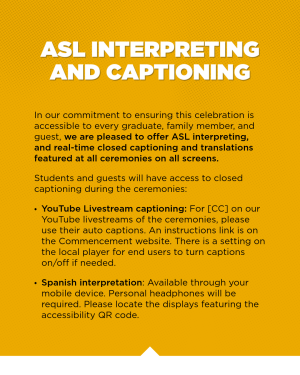
Every event and audience is different. Start by considering which accessibility and language services may be useful for students, faculty, guests, and other attendees.
Live Captioning
Real-time text of spoken content for attendees who are Deaf or hard of hearing, as well as anyone who benefits from following along with text.
Multilingual Subtitles
Real-time translated text that allows attendees to follow spoken content in another language.
Translated Audio
Real-time translated audio that attendees can listen to using their own headphones or earbuds.
How these services are delivered will depend on your event. In-person attendees may access captions or translations on their personal devices, venue displays, or event screens. Remote attendees may access these services through the livestream or an accessible streaming player.
The right combination will depend on your audience, venue, event format, and any accommodations that have been requested.
Every event and institution has its own planning process. The recommendations below are intended to complement your existing workflows with practical ideas for incorporating accessibility and language services into your event planning. Starting the accessibility conversation early can provide more time to understand attendee needs, arrange services, and communicate available options.
While Planning: Understand Audience Needs
As accessibility plans begin to take shape, consider what services may be most useful for your audience and how attendees will access them.
Ask About Accessibility and Language Needs
If your existing planning process includes attendee outreach or accommodation requests, consider using those opportunities to share the accessibility and language services that may be available.
Providing information about options such as live captioning, multilingual subtitles, and translated audio can give attendees an opportunity to identify services or languages that would be helpful to them.
Hi [Name],
As we begin planning for [Event], we want to make sure attendees are aware of the accessibility and language options that may be available.
Options may include live captioning, multilingual subtitles, and real-time translated audio. If you would benefit from one of these services or would like to request another accommodation, please let us know.
Requests can be submitted through [form/contact information].
Consider Previous Event Usage
If you have usage data from previous events, it may provide additional insight when planning future services.
Reviewing which accessibility services and languages were used can help identify recurring audience needs and inform which options you may want to make available again.
Previous usage can also be considered alongside accommodation requests and other information your institution already uses when planning accessibility services.
Consider Previous Event Usage
If you have usage data from previous events, it may provide additional insight when planning future services. Reviewing which accessibility services and languages were used can help identify recurring audience needs and inform which options you may want to make available again.
Previous usage can be considered alongside accommodation requests and other information your institution uses when planning accessibility services.
Consider Both In-Person and Remote Audiences
If your event will be livestreamed, consider how available accessibility and language services will extend to people joining remotely.
Captions, multilingual subtitles, and translated audio may be delivered differently online than they are inside the venue. Considering both audiences during planning can help determine how each service will be delivered and accessed.
Once Services Are Confirmed: Build Awareness
Once accessibility and language services are confirmed, consider how attendees will learn about the options available to them. Making a service available is only part of the process. Attendees also need to know that it exists, understand how it can help them, and know how to access it.
Include Accessibility Information in Event Communications
Look for opportunities to incorporate accessibility information into the communications already being used for your event.
Depending on the event, these may include:
- Event and venue webpages
- Registration pages
- Attendee emails
- Campus communications
- Social media
- Digital signage
- Event programs and materials
Where possible, be specific about what will be available, including the languages offered and how attendees can access the services. If translated audio will be available, letting attendees know that headphones or earbuds are recommended can help them arrive prepared.
If the event will also be livestreamed, include information about the accessibility and language options available to remote viewers and how they can access them.
Make Promotion Easier
Aberdeen's In-Person Events Promotion Toolkit includes practical recommendations and ready-to-use resources to help organizations build awareness of available captioning and translation services.
The toolkit includes ideas for websites, emails, social media, event screens, signage, QR codes, handouts, attendee instructions, and other ways to make accessibility services easier to discover and use.
As the Event Approaches: Remind and Confirm
As the event gets closer, consider reminding attendees about the accessibility and language services that will be available. Even when services have been promoted earlier, a timely reminder can help attendees know what to expect and arrive prepared to use them.
Repeat the Message Where Attendees Are Already Looking
Consider repeating accessibility information through the communication channels already being used as the event approaches. This might include attendee emails, event webpages, campus communications, social media, or other pre-event reminders.
Using consistent access instructions, QR codes, links, and language information across communications can help attendees know what to look for when they arrive.
Share the Details Attendees Will Need
This is a good opportunity to share the practical details attendees will need.
Helpful details may include:
- Which accessibility and language services will be available
- Where captions will be displayed or accessed
- How to access captions or translations on a personal device
- Which languages will be available
- How remote viewers can access the available services
- Whether headphones or earbuds are recommended for translated audio
- Where attendees can go with questions or for assistance
If your institution has received individual accommodation requests, this may also be an opportunity to reconfirm those arrangements through your existing process.
Hi [Name],
[Event] is almost here!
A quick reminder that [live captions / multilingual subtitles / translated audio] will be available during the event.
[Insert access instructions or link.]
If you plan to listen to translated audio on your personal device, please remember to bring headphones or earbuds.
For questions about accessibility services or assistance accessing them, please contact [contact information].
We look forward to seeing you at [Event].
Review Event-Day Access Materials
As the event approaches, consider reviewing the materials that will help attendees discover and access services on event day. This may include QR codes, event slides, signage, printed materials, or other access instructions planned for your event.
During the Event: Make Services Easy to Find
Once attendees arrive, making accessibility and language services easy to recognize and access can help connect people with the options available to them.
The same information shared before the event can continue into the on-site experience, helping attendees recognize the services they have already heard about and giving others an opportunity to discover them.
Keep Access Information Visible
Depending on the event and venue, accessibility information might appear on:
- Event screens or presentation slides
- Entrance and lobby signage
- A-frame signs
- Registration or information tables
- Printed programs or handouts
- Seat-back cards
- Signs with QR codes
Wherever the information appears, simple and consistent instructions can make it easier for attendees to identify what is available and how to access it.
Help Attendees Know Where to Go
Staff, volunteers, or other event personnel who interact with attendees can also help connect people with the available services. They do not need to know every technical detail, but knowing which services are available and where to direct someone for access or assistance can make the experience easier for attendees.
After the Event: Gather Feedback
Feedback and usage data can provide valuable insight into how attendees interacted with the services and what may be useful for future events.If your institution already gathers post-event feedback, consider including questions about the accessibility and language services that were available.
Questions Might Include:
- Which accessibility or language services did you use?
- Were the services easy to find?
- Were the access instructions clear?
- What worked well?
- Was anything difficult to access?
- Are there additional services or languages you would like available at future events?
Usage data can provide another perspective. Reviewing which services and languages attendees accessed can help inform future planning and promotion.
From Planning to Participation
Providing accessibility and language services is an important first step. Making attendees aware of those options and giving them a clear, simple way to access them helps turn availability into participation.
Thoughtful communication before and during an event can help the services being provided reach more of the people who can benefit from them.