Distance education is rapidly expanding within California Community Colleges (CCC) as more students are choosing to take online courses to fit their busy schedules. Ensuring equal access demands accessible course content, notably captioning and transcription, to comply with legal requirements and support student success. The Distance Education Captioning and Transcription (DECT) Grant provides vital funding to all 116 CCCs, specifically addressing these critical accessibility needs in the growing online learning environment.
Pre-Approved Vendor Status
Aberdeen Broadcast Services is a state-approved DECT Grant vendor, allowing California Community Colleges to contract with us directly. This is the most streamlined process for colleges, as it signifies that we are already vetted and have a strong understanding of the grant requirements, simplifying both service delivery and billing.
Please visit the CCC DECT Grant website for official grant information and a list of approved vendors.
What's Covered by the DECT Grant?
The DECT Grant funds services that transcribe spoken content to ensure the accessibility of aural information. The scope of funding primarily includes:
Live Captioning: Real-time transcription of the spoken word for synchronous online classes through Zoom or similar platforms. These services are also ideal for internal meetings, faculty-led sessions, and campus-wide events where accessibility is essential.
Post-Production Captioning: Synchronization of text with audio or video for prerecorded content used in asynchronous learning, such as YouTube videos. This is used for course content that will not be viewed live.
Transcription: Providing text versions of audio content. Ideal for students to review the transcript of the spoken content after it’s been viewed.
Audio Description: Funding may also be available for Audio Description if the college is striving for WCAG 2.0 AA compliance.
Funding is available for accessibility services across various eligible course types and content:
Credit and Non-Credit classes that generate apportionment.
On-campus classes utilizing distance methods of content delivery (e.g., class capture, web conferencing, LMS content).
(Note: Specific rules apply to which videos qualify; consult the official grant website for full details. Community services/continuing education material is not covered.)
Accessing DECT Grant Funds
Requests for captioning services are typically made by college staff, often faculty who need their course materials captioned, or individuals in departments such as the Disabled Students Program or Accessibility Services.
Partnering with a pre-approved vendor can simplify the process of identifying needs and estimating costs. Simply fill out this request form, and we’ll help you get started!
Why Utilizing the DECT Grant Matters
Leveraging the DECT grant is crucial for California Community Colleges because it directly contributes to key institutional goals:
Ensuring Student Access: Provides necessary accommodation for students with disabilities, particularly those who are deaf or hard of hearing, ensuring equitable access to educational content.
Supporting Faculty Innovation: Empowers faculty to effectively use media-rich content in their courses without accessibility being a barrier.
Meeting Legal Requirements: Helps colleges comply with federal and state accessibility laws and regulations.
Advancing Technology Use: Supports the effective integration of technology in teaching and learning by making digital content accessible.
We’re here to help!
The DECT grant is a valuable resource designed to help California Community Colleges make their distance education offerings fully accessible and inclusive. Leveraging this funding is essential for supporting all students and advancing digital learning.
We encourage your college to take full advantage of this opportunity. Let’s work together to make sure your students have the access they deserve!
The recent pivot to embrace the perks of AI for captioning allowed us at Aberdeen to set our sights on integrating it into parts of our Spanish workflow via our Aberscript transcript editor application, something which we began to use for English programs over 5 years ago and have now fully implemented for Spanish content. This was developed, in part, as an effort to keep transcription in-house and reduce the typical time it would take to transcribe a program from scratch before preparing it for the finishing touches in MacCaption.
Our Spanish captioning clients offer content that covers a variety of topics such as news, sports, entertainment, medicine, automotive sales, and Christian programming. The initial challenge was choosing the right field to begin testing our AI model. Initial test programs often included multiple speakers throughout the program who frequently code-switch with English or Spanglish phrases, adding complexity to the transcription process. Due to frequent language shifts, testing AI was not optimal for this variety.
Our best bet was looking at the content that makes up the majority of our day-to-day work: Christian content, where it’s much easier to find a single speaker addressing his or her audience and where the formality of language is likely to remain consistent and free of informal slang, contractions, and colloquialisms. Given our success with English captioning, we decided to leverage AI’s many advantages—automating repetitive functions, enabling real-time generation and quicker turnarounds, maximizing speed and efficiency, and offering vastly improved and adaptable machine learning and speech recognition—perks that tend to outperform traditional methods.
By far, one of the biggest perks has been AI's ability to generate words instantly and accurately, helping to reduce some of the tediousness involved in typing out words, phrases, sentences, and so on. AI has now achieved optimal accuracy with the correct transcription of accent marks in Spanish vowels (a, e, i, o, u) as well as the ñ. This results in a more free-flowing and undisturbed editing process.
For AI to be successful in this regard, it needs to know when to pick up the natural stress in syllables so that it generates the accent mark on top of the correct letter. Here are some of the common Christian terms and names that appear frequently in Spanish and were properly transcribed with the correct accent marks: amén, Jehová, Adán, oración, redención, apóstol, ángel, Espíritu Santo, Jesús, Lázaro, Noé, María, Salomón, Salvación. Knowing this, the next focus was implementing AI for a client whose content aligned with our goal of maximizing efficiency and achieving a quicker turnaround.
The first stage of incorporating AI into our Spanish workflow began in mid-2024, as we introduced the Spanish-dubbed version of one of our biggest clients. And given that we were now making this transition, with recurring episodes airing on many different networks, we were looking for ways to make progress without outsourcing. The workflow associated with this program was once destined for out-of-house transcription and captioning--with only a brief QC and final exports created in-house. In the past, a few business days for two different programs were generally required, given that the vendor needed ample time to transcribe from scratch and to caption before sending us the completed files for a final QC.
At the beginning of our AI pivot for this particular client, every episode required about 90-120 minutes to transcribe from scratch, and another 45 minutes to complete the post-transcription QC and captioning in MacCaption. However, after months of fine-tuning and consistent use of Aberscript, now it only takes us around 90 minutes in total to complete each — 60 minutes for transcription and 30 for post-transcription QC and captioning — while still maintaining the same level of quality expected for this product level.
For our clients, these efficiencies allow us to respond quickly and accommodate shifting deadlines without compromising quality. AI helps us ensure your programs are captioned with accuracy and delivered on schedule, all without sacrificing the attention to detail your content deserves. It enables quicker turnarounds and supports urgent delivery timelines, something that’s become increasingly important in fast-paced production environments.
We are currently working on running other Spanish programs through our AI workflow to boost efficiency, accuracy, and work time goals. Without a doubt, we will continue to maximize its potential in 2025.
With AI-enhanced tools and a refined in-house workflow, we’re helping clients get accurate, broadcast-ready Spanish captions faster than ever, without sacrificing quality. Whether you’re managing weekly programs or shifting timelines, we’re here to make your process faster and more efficient.
In this session, Tony from Aberdeen Broadcast Services, an accessibility specialist focusing on higher education, dives deep into the essentials of remote captioning. The talk, co-presented by Amiyah Lee, addresses some of the most frequently asked questions from colleges and universities regarding setting up remote captioning, where the live writer does not need to be physically present in the classroom. This approach offers greater flexibility and cost-effectiveness while maintaining the quality needed to meet accessibility standards.
Tony shares some statistics on the use of captioning in higher education, such as the fact that 19% of college students in the United States experience some degree of hearing loss. Additionally, 71% of students without hearing difficulties use captions at least some of the time, and 90% of students who use captions say that they help them learn more effectively. Furthermore, 65% of students use captions to help focus and retain information, while 62% use them to overcome poor audio quality.
Tony and Amiyah provide an overview of the practical steps institutions can take to implement remote captioning, including selecting the right technology and overcoming common challenges. They also discuss how Aberdeen Broadcast Services supports educational institutions by offering affordable captioning solutions, both human captioning and AI-powered ASR technology, that meet compliance requirements without compromising on quality.
Automatic Speech Recognition (ASR) is now making a substantial impact on how local churches connect with their communities, breaking down barriers once caused by financial limitations. With ASR, churches can now offer inclusive services to the Deaf and Hard of Hearing (D/HH) community. But it doesn’t stop there—when combined with Automatic Machine Translation (AMT), this powerful duo overcomes language hurdles, translating sermons into dozens of languages. Even the smallest congregations can now reach a global audience, sharing their message far and wide.
We previously explored the ethical and theological concerns with AI in the Church in our last blog post: The Role of AI in Enhancing Church Accessibility and Inclusion.
While human-generated captions and translations always offer the highest quality, ASR and AMT provide a cost-effective solution that can be utilized by churches and ministries of any size or budget. Imagine your sermon reaching the Deaf and Hard of Hearing (D/HH) community, allowing for full participation, or sharing your message in various languages to a worldwide audience that might otherwise have been unreachable. AI-powered closed captioning and translations help make this a reality. ASR captions and translations are not only a technological advancement; they are tools for inclusivity and global outreach.
Churches aiming to make a significant impact can turn to AI-powered accessibility tools, once considered out of reach, for preaching and teaching. Practical uses of ASR include:
Live Streaming: AI-powered ASR can integrate with live streaming services to provide real-time captions, subtitles, or even real-time voice dubbing, making worship services accessible to a global audience. This allows viewers from different parts of the world to follow along with the sermon, regardless of their language or hearing ability, thereby expanding the church’s reach and inclusivity.
In-Person Services: ASR technology can make live sermons more accessible by providing real-time text or audio dubs on congregants’ mobile devices. By making the sermon text available on personal devices, churches can enhance comprehension and engagement for in-person attendees.
Notes/Summaries: After a sermon is transcribed, extend the message's reach with our AI-enhanced sermon extras. Whether you want to generate Bible studies or daily devotionals, curate key terms and highlight Bible verses, or create summaries and discussion questions, our enhanced transcript materials are designed to add value and extend the impact of your content. Create endless content from a single sermon.
Aberdeen’s new ASR solution, developed with ministry in mind, employs robust AI engines and large language models to provide a powerful advantage in delivering Christian content. Each solution is carefully crafted to fit your specific ministry needs, providing high-quality captions at a fraction of the cost.
ASR CAPTIONING & TRANSCRIPTION SERVICES
In-person Captions & Translation
Transform your in-person church services with instant, real-time captioning & translation.
With our real-time captioning solution, you can ensure that everyone, regardless of hearing ability or language preference, can follow along with ease. Designed for seamless integration into your existing setup, our captions are easy to use and perfect for enhancing the inclusivity of your in-person worship experiences.
Discover how Aberdeen’s ASR solution offers a cost-effective approach to closed captioning & translation. Learn more here: Aberdeen ASR Closed Captioning.
Does Artificial Intelligence (AI) have a place in the Church? Countless podcasts, articles, and sermons are popping up addressing the same question. Despite the widespread discussion, many overlook how deeply AI is already embedded in our daily lives. It influences everything from manufacturing processes and automotive technology to how our food is produced, impacting many products and services we use daily.
Understanding AI: What Is It?
To tackle the question, “Does AI have a place in the Church?” let’s first understand what AI is. At its core, AI simulates human intelligence, performing tasks that typically require human intervention. In the article Artificial Intelligence, IBM explains that “On its own or combined with other technologies (e.g., sensors, geolocation, robotics) AI can perform tasks that would otherwise require human intelligence or intervention”.
Think of AI as a modern tool designed to handle tedious, repetitive, and data-intensive tasks efficiently. For Christians, AI should be considered like any other tool, such as the internet. It’s a resource that, when used wisely, can enhance our practices and outreach without compromising our core values or mission.
Concerns and Fears about AI in Churches
The fear of AI has led some people to strongly believe that the world will be overtaken by it. This reaction is understandable, as AI has quickly evolved from a science fiction concept to a societal staple. Major news outlets continuously report on various issues related to AI. Hollywood produces big-budget movies and TV shows about AI taking over the world, while authors write extensively about its potential aftermath and impact.
Those influences have changed how the Christian views AI. 52% of Christians in the U.S., when polled in the Barna Group’s research How U.S. Christians Feel About AI & the Church, said they would be disappointed if their church used AI. Moreover, less than 25% of those polled view AI as good for the Church.
Several reasons contribute to why many Christians are hesitant about incorporating AI into the church, including:
Ethical issues: Plagiarism will lose the congregation’s trust.
Creative bypass: Deeply emotional worship can feel false.
Theological concerns: Concepts require the nuance of human interpretation.
Loss of critical thinking: Pastors can become apathetic and lethargic.
Loss of human connection: Sermons, studies, and classes become non-familial.
One scholar, Dr. Cory Marsh, on the episode Christians and AI talked on the topic and stated that the major concern of many Christian Pastors, from the list of concerns, is the loss of critical thinking. When crafting a sermon, study, or class the major component of the process is critical thinking so when pastors take that away, other items on the list, such as theological concerns and loss of human connection, quickly follow. It’s completely rational why the church is concerned about the rise of AI and the use of AI-enabled products.
Moving past these concerns, it's also important to recognize how AI can positively impact church operations, especially by enhancing the inclusivity of services.
AI & Accessibility: Enhancing Inclusivity
The pace of technological change is relentless, and the need for inclusive communication solutions in ministries is no different. To meet the ever-growing demand for accessibility, ministries require a diverse toolkit. One tool that has been transformed by the artificial intelligence boom is Automatic Speech Recognition (ASR).
Programs like Dragon NaturallySpeaking or your phone’s Speech-to-Text are examples of ASR technology. The IBM article What is Speech Recognition explains, in simple terms, that this tool converts spoken words into text. Although ASR systems initially have a limited vocabulary, they can be significantly enhanced by integrating resources like Large Language Models (LLMs) and Deep Learning. These advanced technologies improve the quality, accuracy, and efficiency of captions, transcriptions, and translations, making ASR tools more effective and reliable.
Unlike sermon content creators, ASR does not add interpretation or creativity to your content; it simply converts your speech to text, word for word.
Embracing AI: A Path to Greater Accessibility in the Church
While AI poses certain ethical and practical challenges within the church context—ranging from concerns about authenticity in worship to the potential for diminished human connection—its benefits, particularly in enhancing accessibility and inclusivity, cannot be ignored. Tools like Automatic Speech Recognition (ASR) exemplify how AI can serve the church by broadening access to religious services for those with hearing impairments or language barriers. As technology continues to evolve, it’s important for church leaders to critically evaluate the opportunities available that do not compromise the spiritual integrity of their mission.
ASR CAPTIONING & TRANSCRIPTION SERVICES
In-person Captions & Translation
Transform your in-person church services with instant, real-time captioning & translation.
With our real-time captioning solution, you can ensure that everyone, regardless of hearing ability or language preference, can follow along with ease. Designed for seamless integration into your existing setup, our captions are easy to use and perfect for enhancing the inclusivity of your in-person worship experiences.
Discover how Aberdeen’s ASR solution offers a cost-effective approach to closed captioning. Learn more here: Aberdeen ASR Closed Captioning.
Closed captioning serves as a powerful tool that extends its impact far beyond aiding the deaf and hard-of-hearing community. Its significance transcends age, abilities, and background, making it an invaluable resource for both educators and learners. In the digital age, closed captioning has emerged as a transformative resource, with research revealing that students, English language learners, and children with learning disabilities who watch programs with closed captioning turned on improve their reading skills, increase their vocabulary, and enhance their focus and attention.
The scholarly article, Closed Captioning Matters: Examining the Value of Closed Captions for All Students (Smith 231) states that “Previous research shows that closed captioning can benefit many kinds of learners. In addition to students with hearing impairments, captions stand to benefit visual learners, non-native English learners, and students who happen to be in loud or otherwise distracting environments. In remedial reading classes, closed captioning improved students’ vocabulary, reading comprehension, word analysis skills, and motivation to learn (Goldman & Goldman, 1988). The performance of foreign language learners increased when captioning was provided (Winke, Gass, & Sydorenko, 2010). Following exams, these learners indicated that captions lead to increased attention, improved language processing, the reinforcement of previous knowledge, and deeper understanding of the language. For low-performing students in science classrooms, technology-enhanced videos with closed captioning contributed to post-treatment scores that were similar to higher-performing students (Marino, Coyne, & Dunn, 2010). The current findings support previous research and highlight the suitability of closed-captioned content for students with and without disabilities.”
Reading Rockets, a national public media literacy initiative provides resources and information on how young children learn and how educators can improve their students’ reading abilities. In the article, Captioning to Support Literacy, Alise Brann confirms that “Captions can provide struggling readers with additional print exposure, improving foundational reading skills.”
She states, “In a typical classroom, a teacher may find many students who are struggling readers, whether they are beginning readers, students with language-based learning disabilities, or English Language Learners (ELLs). One motivating, engaging, and inexpensive way to help build the foundational reading skills of students is through the use of closed-captioned and subtitled television shows and movies. These can help boost foundational reading skills, such as phonics, word recognition, and fluency, for a number of students.”
Research clearly demonstrates that “people learn better and comprehend more when words and pictures are presented together. The combination of aural and visual input gives viewers the opportunity to comprehend information through different channels and make connections between them” (The Effects of Captions on EFL Learners’ Comprehension of English-Language Television Programs).
From bolstering reading skills, to enhancing focus and language comprehension, the benefits of closed captioning are numerous. We at Aberdeen Broadcast Services are committed to providing quality closed captions for television (TV) and educational programming.
Here is the public service announcement (PSA) we released in 2016 on local broadcast stations, emphasizing how closed captioning can enhance children's literacy skills.
This article was co-written with the help of both ChatGPT and Google Bard as a demonstration of the technology discussed in this article. You can also read along with Aberdeen's President, Matt Cook in the recording below - but not really, this is Matt's voice cloned using a short clip of Matt's voice given to AI.
Artificial Intelligence (AI) has revolutionized numerous industries, and its influence on language-related technologies is particularly remarkable. In this blog post, we will explore how AI is transforming closed captioning, language translation, and even the creation of cloned voices. These advancements not only enhance accessibility and inclusion but also have far-reaching implications for communication in an increasingly globalized world.
AI in Closed Captioning
Closed captioning is an essential feature for individuals who are deaf or hard of hearing, enabling them to access audiovisual content. Traditional closed captioning methods rely on human transcriptionists, however, AI-powered speech recognition algorithms have made significant strides in this field.
Using deep learning techniques, AI models can more accurately transcribe spoken words into text, providing real-time closed captioning. This is not up to the FCC guidelines for broadcast but is oftentimes good enough for other situations where the alternative is to have no closed captions at all. These models continuously improve their accuracy by analyzing large amounts of data and learning from diverse sources. As a result, AI has made closed captioning more accessible, enabling individuals to enjoy online videos with greater ease.
Our team is working hard to develop and launch AberScribe, our new AI transcript application powered by OpenAI, sometime in mid-2024. From any audio/video source file, the AberScribe app will create an AI-generated transcript that can be edited in our online transcript editor and exported into various caption formats. AberScribe will also have added features for creating other AI-generated resources from that final transcript. Resources like summaries, glossaries of terms, discussion questions, interactive worksheets, and many more - the possibilities are endless.
Language barriers have long hindered effective communication between people from different linguistic backgrounds. However, AI-powered language translation has emerged as a game-changer, enabling real-time multilingual conversations and seamless understanding across different languages.
Machine Translation (MT) models, powered by AI, have made significant strides in accurately translating text from one language to another. By training on vast amounts of multilingual data, these models can understand and generate human-like translations, accounting for context and idiomatic expressions. This has empowered businesses, travelers, and individuals to engage in cross-cultural communication effortlessly.
In addition to written translation, AI is making headway in spoken language translation as well. With technologies like neural machine translation (NMT), AI systems can listen to spoken language, translate it in real-time, and produce synthesized speech in the desired language. This breakthrough holds immense potential for international conferences, tourism, and fostering cultural exchange.
Cloned Voices and AI
The advent of AI has brought about significant advancements in speech synthesis, allowing for the creation of cloned voices that mimic the speech patterns and vocal identity of individuals. While cloned voices have sparked debates regarding ethical use, they also present exciting possibilities for personalization and accessibility.
AI-powered text-to-speech (TTS) models can analyze recorded speech data from an individual, capturing their vocal characteristics, intonations, and nuances. This data is then used to generate synthetic speech that sounds remarkably like the original speaker. This technology can be immensely beneficial for individuals with speech impairments, providing them with a voice that better aligns with their identity.
Moreover, cloned voices have applications in industries like entertainment and marketing, where celebrity voices can be replicated for endorsements or immersive experiences. However, it is crucial to navigate the ethical considerations surrounding consent and proper usage to ensure that this technology is used responsibly.
Conclusion
Artificial Intelligence continues to redefine the boundaries of accessibility, communication, and personalization in various domains. In the realms of closed captioning, language translation, and cloned voices, AI has made significant strides, bridging gaps, and enhancing user experiences. As these technologies continue to evolve, it is vital to strike a balance between innovation and ethical considerations, ensuring that AI is harnessed responsibly to benefit individuals and society as a whole.
Been tasked with figuring out how to implement closed captions in your video library? The process can be overwhelming at first. While evaluating closed captioning vendors, it’s good to understand the benefits of captioning, who your audience is, what to consider when it comes to quality, and what to expect from a vendor.
There are several things that an organization should consider and evaluate before choosing a closed captioning vendor. Some of the most important factors include:
Benefits of Closed Captioning
Accessibility: First, and most importantly, closed captioning makes videos more accessible to people with hearing impairments. This can help to level the playing field and ensure that all viewers have the opportunity to enjoy the content.
Non-native English speakers: Closed captioning can be helpful for non-native English speakers. It can help them to understand the content of videos even if they are not fluent in English.
People in noisy environments: Closed captioning can be helpful for people who are in noisy environments. It allows them to watch videos without having to worry about missing any of the audio.
Engagement: Closed captioning can help to keep viewers engaged in videos. When viewers can read along with the audio, they are more likely to stay focused and understand the content.
Comprehension: Closed captioning can help viewers to better understand the content of videos. When viewers can see the words that are being spoken, they are better able to process the information and remember it.
SEO: Closed captions can help to improve the search engine optimization (SEO) of videos. This is because search engines can read the text of captions, which can help to improve the ranking of videos in search results.
Overall, closed captioning is a valuable tool that can benefit a wide range of audiences. It makes videos more accessible, engaging, and comprehensible for everyone.
Evaluating Vendors
By considering these factors, organizations can choose a closed captioning vendor that will meet their needs and provide a high-quality service:
Accuracy: The captions should be accurate and error-free. This is important for all viewers, but it is especially important for people with hearing impairments.
Timeliness: The captions should be delivered on time. This is important for live events, as well as for pre-recorded videos that are being released on a tight schedule.
Format: The captions should be delivered in a format that is compatible with the organization's equipment. This may include closed captions for live events, or subtitles for pre-recorded videos.
Cost: The cost of closed captioning services varies depending on a number of factors, including the length of the video, the number of viewers, and the turnaround time required.
What to Expect in the Process
Start early: Closed captioning can take time, so it is important to start the process early. This will help to ensure that the captions are accurate and delivered on time.
Test the captions: Once the captions are complete, it is important to test them to make sure that they are accurate and error-free. This can be done by having a few people watch the video with the captions turned on.
Provide feedback: If there are any errors in the captions, or if the captions are not formatted correctly, it is important to provide feedback to the closed captioning vendor. This will help to ensure that the captions are of the highest quality.
Use these tips when evaluating closed captioning vendors and you’ll ensure that their videos are accessible to everyone and that they provide a positive viewing experience for all viewers.
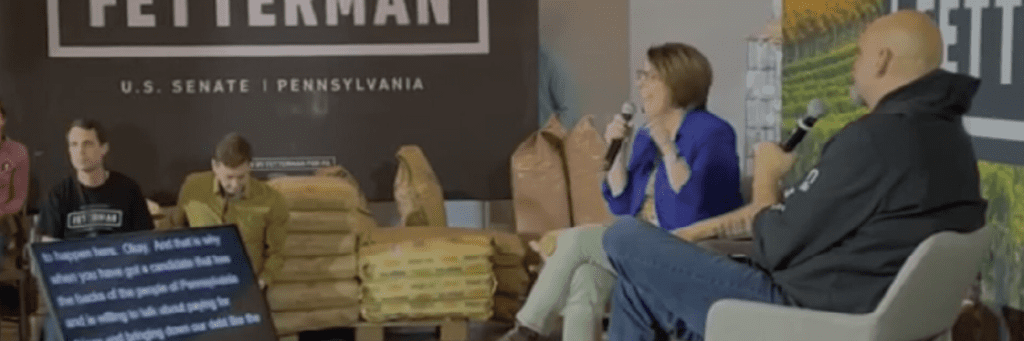
In 2022, just days before winning the primary to become the Democratic candidate for the Senate in Pennsylvania, John Fetterman suffered a stroke. Like many stroke victims, he experienced a loss of function that persisted long after his recovery, including lingering auditory processing issues that made it challenging for him to understand spoken words. In interviews in the months that followed, John Fetterman relied on closed-captioning technology to help him comprehend reporters' questions and assist in his debates against his primary opponent, Dr. Mehmet Oz.
Upon being elected to serve in the US Senate, closed-captioning devices were installed both at his desk and at the front of the Senate chambers to facilitate his understanding of his colleagues as they spoke on the Senate floor. John Fetterman serves on several committees, including the Committee on Agriculture, Nutrition, and Forestry; the Committee on Banking, Housing, and Urban Affairs; the Committee on Environment and Public Works; the Joint Economic Committee; and the Special Committee on Aging. Closed-captioning has proven invaluable, benefiting both John Fetterman and his constituents in Pennsylvania, extending its utility beyond merely enabling him to watch TV at night or understand reporters.
With the assistance of closed-captioning technology, John Fetterman has been able to serve the people of Pennsylvania at the highest levels of government. During a hearing with the Senate Special Committee on Aging, Fetterman himself expressed gratitude for the transcription technology on his phone, stating, "This is a transcription service that allows me to fully participate in this meeting and engage in conversations with my children and interact with my staff." He later added, "I can't imagine if I didn't have this kind of bridge to allow me to communicate effectively with other people."
Captioning and transcription efforts extend well beyond being a mere requirement for broadcasting a program. As captioning technology continues to advance, an increasing number of individuals, like John Fetterman, will have the opportunity to participate in public life, even at the highest levels of government. They will serve others, even as transcription and captioning technology serves them.
Take a look at his setup in action here. Dedicated monitors with real-time captions displayed are becoming an increasingly popular setup at live events. Alternatively, explore the convenience of live captioning on mobile phones, making captions accessible from any seat in the venue. Either option is easily achievable — contact one of our experts to find out more.
In the July ‘21 release of Premiere Pro, Adobe introduced its artificial intelligence (AI) powered speech-to-text engine to help creators make their content more accessible to their audiences. Their extensive toolset allows their users to edit, stylize, and export captions in all supported formats straight out of the sequence timeline of a Premiere Pro project. A 3-step process of auto-transcribing, generating, and stylizing captions all within the platform already familiar to its users delivers a seamless experience from beginning to end. But how accurate is the final product?
This blog article was published in March 2022, and since then, ASR (Automatic Speech Recognition) technology has advanced significantly. While AI-powered ASR still does not outperform human writers — which we firmly consider the gold standard — these advancements have been so substantial and continue to improve. This progress gives us the confidence to use ASR as a budget-friendly alternative for specific applications.
Today, at their best, AI captions have an error rate of 5-10% - much improved over the 80% accuracy we saw just a few years ago. High accuracy is crucial for the deaf and hard-of-hearing audience as each error adds to the possibility of confusing the message. To protect all audiences that rely on captioning to understand television programming, the Federal Communications Commission (FCC) set a detailed list of quality standards that all captions must meet to be acceptable for broadcast back in 2015. Preceding those standards, the Described and Captioned Media Program (DCMP) published its Captioning Key manual over 20 years ago and has since been a valuable reference for captioning of both entertainment and educational media targeted to audiences of all age groups. Simply having captions present on your content isn’t enough, it needs to be accurate and best replicate the experience for all audiences.
Adobe’s speech-to-text engine has been one of the most impressive that our team has seen to date, so we decided to take a deeper look at it and run some tests. We tasked our most experienced Caption Editor with using Adobe’s auto-generated transcript to create & edit the captions to meet the quality standards of the FCC and the deaf and hard of hearing community on two types of video clips: a single-speaker program and one with multiple speakers. Our editor used our Pop-on Plus+ caption product for these examples, which are our middle-tier quality captions that fulfill all quality standard requirements but are not always 100% free of errors.
Did using Adobe’s speech-to-text save time, or did it create more work in the editing process than needed? Here’s how it went…
In-depth comparison documents that evaluate the captions cell-by-cell are available for download here:
In this example, we used the perfect scenario for AI: clear audio, a single speaker at an optimal words-per-minute (WPM) speaking rate, and no sound effects or music.
The captions contained the following issues that would need to be corrected by the Caption Editor:
No speaker ID.
Strange leading spaces before the second caption line - Caption Editor can delete easily in their software.
A total of 10 cells out of 95 were formatted the way our Caption Editor did it and would have required no further attention at all.
Several first words were not capitalized.
Some sentences had end-sentence punctuation in the middle of a sentence.
Many words were wrong.
Most cells formatted poorly, resulting in cells with 2-3 words, or cells that were difficult to read.
Many of these cells can be optimized and lines combined for ease of reading.
Several cells with a duration of less than 1 second.
Here’s the clip with Adobe’s speech-to-text captions overlayed on the top half of the video, and ours on the bottom half.
Multiple Speaker Clip
For the next clip, we went with a more realistic example of television programming where there are multiple speakers, an area where AI is known to struggle and has difficulties identifying the speakers. This clip also features someone with a pronounced accent, commentators speaking over one another, and proper names of athletes – all of which our editors take the time to research and understand.
The same errors detailed in the single-speaker example are present throughout, among the other difficulties we expected it to have. In fact, there were so many errors that our editor was unable to use the transcript from Adobe and started from the beginning using our own workflow.
Here’s a sample of the first 9 cells of captions with what Adobe transcribes in the first column, notes from our Caption Editor, and how it should look.
Adobe’s Automated SRT Caption File
Issue
Formatted by Aberdeen
something you are never seen in your life, correct?
No speaker ID.
(Pedro Martinez) It's something you have never seen in your life,
“Correct” is spoken by new speaker.
(Matt Vasgersian) Correct!
So it's.
Missing text.
So it's--so it's MVP of the year!
So we're all watching something different. OK
(Pedro) We're all watching something different.
He gets the MVP.
Okay, he gets the MVP.
I'd be better off.
Completely misunderstood music lyrics.
♪ Happy birthday to you ♪
Oh, you, you guys.
(Matt) You guys.
Let me up here to dove into the opening night against the Hall of Fame.
Merged multiple sentences together.
Just left me up here to die.
You left me up here to die against the hall of famer.
Take a look at the clip. Again, with Adobe's speech-to-text on the top and Aberdeen on the bottom.
In-depth comparison documents that evaluate the captions cell-by-cell are available for download here:
Overall, the quality of the auto-generated captions exceeded expectations, and we found them to be in the top tier of speech-recognition engines available. The timing and punctuation were particularly impressive. However, when doing a true comparison to the captioning work that we would consider acceptable, AI does not meet Aberdeen’s broadcast quality standard.
Aberdeen's post-production Caption Editors are detail-oriented and grammar-savvy and always strive to portray every element of the program with 100% accuracy so that the viewer misses nothing. For our most experienced Caption Editor, it took a 5:1 ratio in time for them to edit and correct the single-speaker clip; meaning, for every minute of video, it took 5 minutes to clean up the transcript and captions. Assuming your team is educated in the proper timing of caption cells, line breaks, and grammar, a 30-minute program may take over 2.5 hours to bring up to standards with a usable transcript. In the second example, the transcript was unusable and would have taken more time to clean up than it did to transcribe from scratch. Double that timeline now.
Consider all of the above when using this service. Do you have the time and resources to train your staff to know how to edit auto-generated captions and get them up to the appropriate standards? How challenging may your content be for the AI? Whenever and however you make the choice, make sure you deliver the best possible experience to your entire audience.